Five ways to make money with website personalization
Five practical ways to make money with website personalization, from matched ads to known contacts, and how this differs from RB2B-style visitor identification.

Key takeaways
- You make money with website personalization when the page continues a specific promise: the ad someone clicked, data you already have on a known contact, or an answer they just gave.
- Paid traffic is the simplest start. One landing page can match each ad, so you stop maintaining a pile of near-duplicate URLs.
- High-intent follow-up belongs to people you already know. The People view shows what a known contact did, and a flow webhook can alert your team when they reach a page you choose.
- Tools like RB2B try to name an anonymous visitor so sales can reach out. RightMessage personalizes the site for contacts from your own email platform or CRM. The two can work together.
- A DISC-matched sales page is an experiment. Run it as a test. I don't have a proven lift number for it.
Match the landing page to the ad
Paid traffic is the most expensive traffic you have. The page should say what the ad already promised.
Say you sell a bookkeeping course. One ad speaks to Etsy sellers. Another speaks to freelancers. Both can land on the same URL. The Etsy seller sees "Bookkeeping built for Etsy shops." The freelancer sees "Bookkeeping for freelancers who hate spreadsheets." Same page in your CMS. Different headline, proof, and call to action.
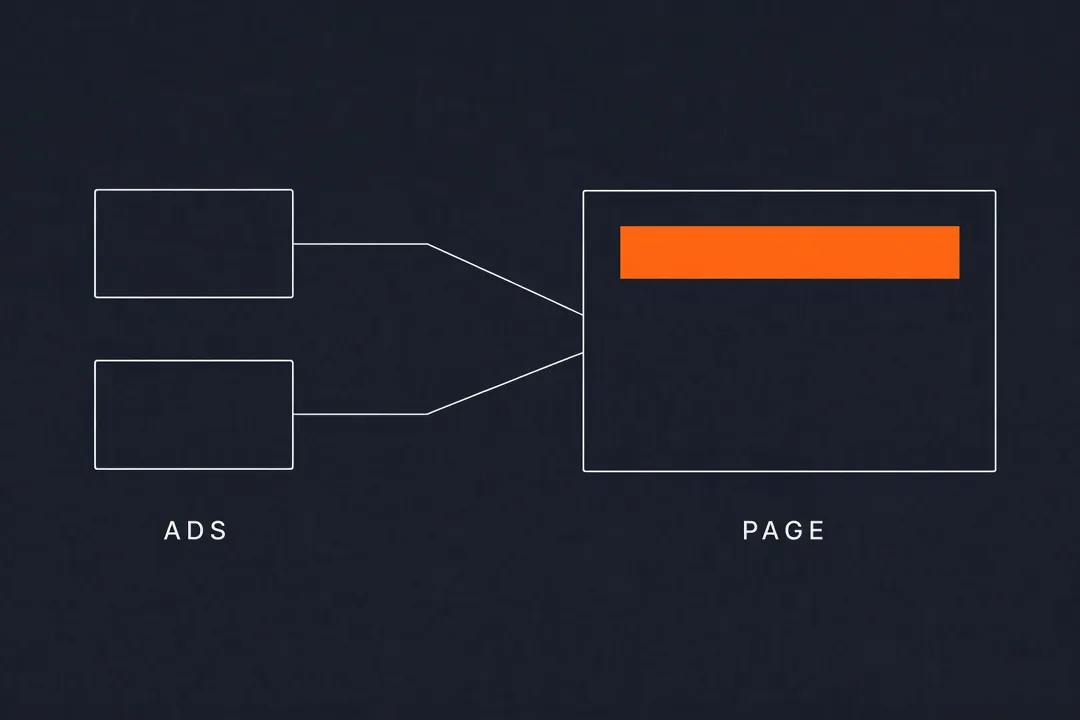
You also stop maintaining a stack of near-duplicate landing pages. Landing page personalization keeps the page you have and makes it specific to each ad.
RightMessage reads UTM and other query parameters on arrival and shows the variant you wrote for that value. You can keep that campaign context for later pages, so the rest of the site can reflect the same ad. Use an allowlist. Don't print raw search terms into a headline, and don't put names or email addresses in the URL. The UTM rules and the UTM condition reference cover the details.
Website personalization campaigns start on Scale. See pricing. An agency can sell the same setup as a message-match build, and we can set it up if you'd rather not.
Test DISC-matched offer pages
This one is experimental. I find it fascinating. Treat it as a test, not a sure thing.
You enrich your list ahead of time with DISC profiles, using a service such as Crystal, and store each subscriber's type as a field in your email platform. When one of those subscribers clicks through from an email, RightMessage knows who they are and can change the emphasis of the offer page.
A direct reader sees outcomes and a short call to action. A steadier reader sees support and what happens after they join. An analytical reader gets the curriculum and the guarantee up top. Same offer. Same price. Different emphasis.
Good salespeople already adjust a pitch on a call. I don't have a proven lift number, so I'd run this against the normal page. People without a DISC field keep the default.
Contact conditions can read that custom field after the visitor is identified, which happens when they click an identifying link in your email, or through the other paths below. Connecting the email platform alone doesn't name everyone who shows up.
Built-in split testing is on Pro. A copywriter can sell the enrichment, the variants, and the test as one launch offer.
Alert someone when a known lead shows intent
When a known lead visits your pricing page or your demo page, someone on your team should hear about it the same day. A weekly report is too late when the offer is high-ticket coaching or a done-for-you service.
Picture a subscriber who has been quiet for months and then spends an afternoon on pricing. A useful alert names them, says which page they hit, and includes something you already know, such as a survey answer. You send a short personal note while they're actually thinking about it. In my experience, same-day follow-up is where these conversations get won or lost.
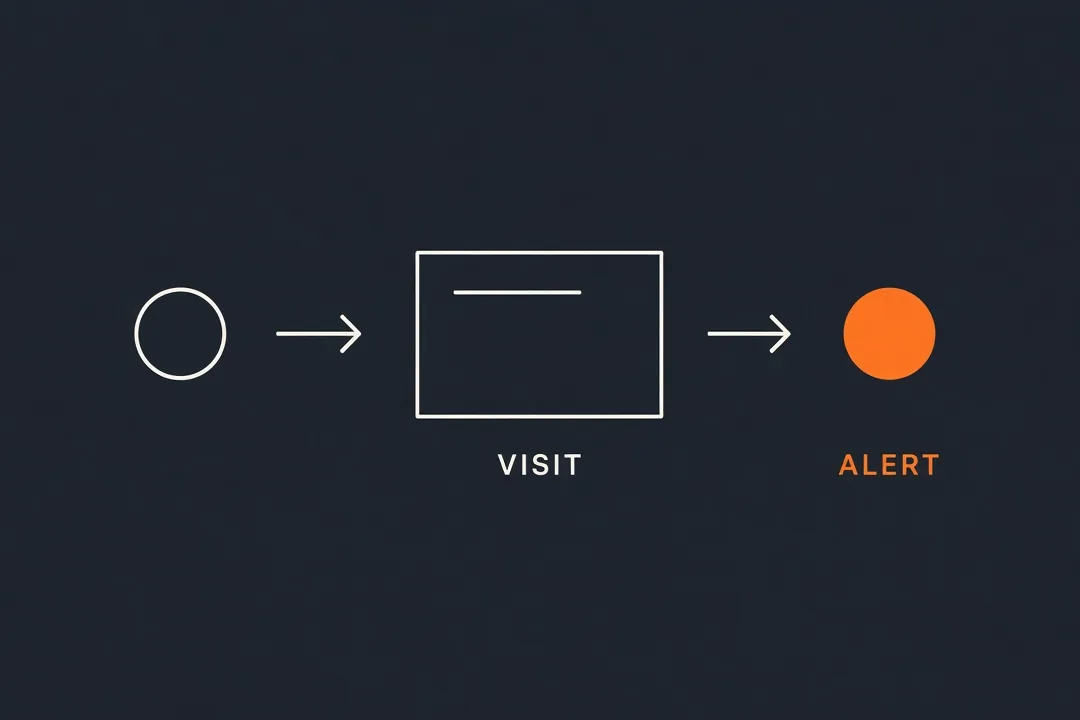
Two pieces do the work. The People view shows a known contact's activity, answers, and email-platform fields. A system flow runs in the background on page views, and a webhook can send that visitor's data to Slack, email, or your CRM when they reach a step you defined, such as the pricing page. It fires once per remembered visitor by default, so a refresh doesn't ping the team again.
Visitor profiles and webhooks are on Pro. An anonymous visit can still hit the webhook, and that payload may have no email. The alert earns its keep when the visitor is already a known contact.
Our MCP server lets an AI assistant work with your campaigns, flows, performance, and data, which is how I'd inspect or prepare the setup. The live ping is the webhook.
Keep the alerts rare enough that someone acts on them. That's the whole service.
Known contacts versus deanonymization tools like RB2B
A separate category of website visitor identification tries to guess who an anonymous visitor is. RB2B is the one people ask me about. Warmly sits nearby. Clearbit Reveal, HubSpot buyer intent (including Breeze Intelligence), and Leadfeeder, part of Dealfront, are the company-level cousins.
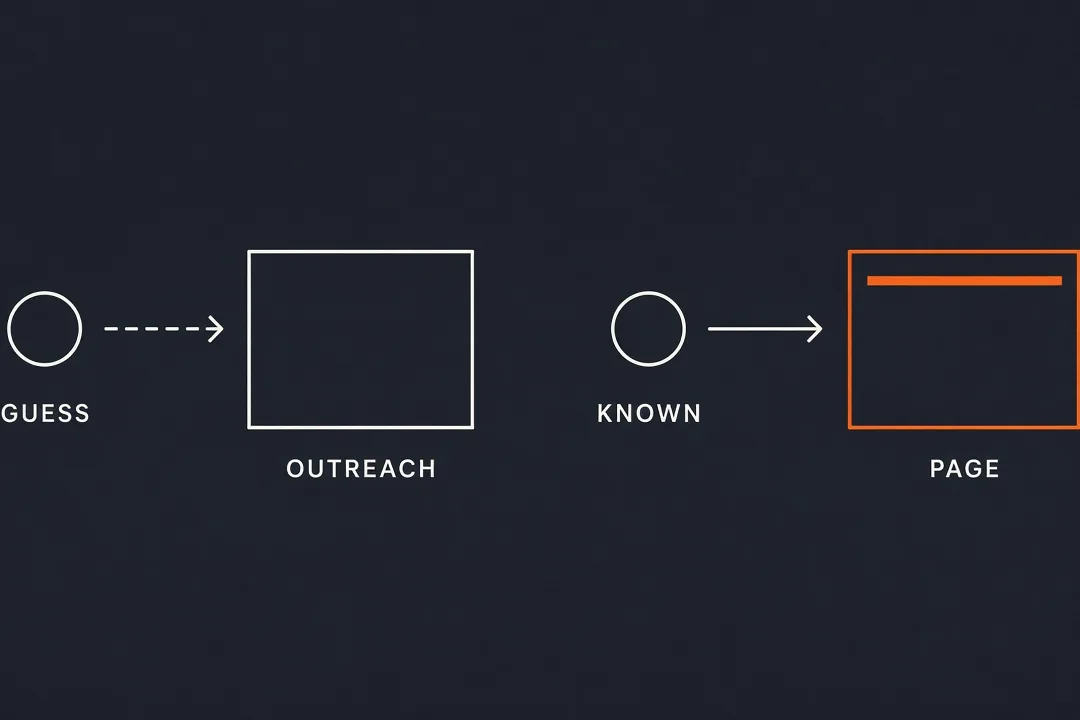
A deanonymization tool looks at an anonymous visit and tries to name it, mainly so sales can reach out. Person-level products, RB2B included, focus on US traffic and return a person for Slack, a CRM, or email. Company-level products match the visit to a company, often from the network address. Clearbit describes Reveal as IP intelligence for companies. HubSpot's buyer intent docs describe the same company match. Leadfeeder describes company-level identification for prospecting. Warmly's pages go past the company, toward the individual, and into outreach.
RightMessage identifies known contacts from your own email platform or CRM, then changes the page. A browser becomes known when someone clicks an identifying email link, fills a supported form, or signs in and your site passes that identity through the JavaScript API. Visitor identification lists the paths. Until then, we personalize from the ad, pages viewed, and on-site answers. We don't guess a name. The data is first-party: they clicked your email, submitted your form, or logged into your product.
The tools can be complementary. If a deanonymization tool calls the visit a target account, it can pass that company or industry into RightMessage with addSegment, and the page can change for that visit. RightMessage doesn't do the reverse-IP lookup. For people already in a CRM, use fields stored on the contact once they're identified. HubSpot's integration is on Pro.
Guessing someone who never introduced themselves is a different privacy posture from using data they already shared, and the rules differ by region. Person-level products often limit where they run. Company-level reverse IP still uses network identifiers and may need a consent choice. Your privacy notice has to match the practice. I'm not offering a legal ruling from a blog post.
Play 3's alert is for a known contact. Play 4's account page uses enrichment you bring in, or CRM fields you already have. If you want a list of strangers for outbound, buy the deanonymization tool. If you want the website to recognize your leads and customers, that's RightMessage.
Personalize for the accounts you actually want
Say you want more healthcare clients. Someone from a hospital group lands on the homepage and sees your healthcare work and an audit call to action, instead of a generic "we help brands grow." Speak to a named account only when you actually know that account.
You bring the company or industry, from the enrichment tool or from fields already stored on a known contact. RightMessage turns those values into segments. I wouldn't put a person's name on a visit that only resolved to a company. A handful of accounts is the point. The page gives those visits a reason to book.
Ask, then change the offer
A short survey or quiz asks a new visitor one or two questions. The site, the offers, and the follow-up then use the answer.
Say you sell courses for photographers. You ask what they shoot, and whether it's for fun or for money. The hobbyist and the full-time pro see different headlines, courses, and lead magnets. Those answers also land in your email platform, so the emails can match.
Answers that sit in a spreadsheet don't make money. Answers that change the next thing someone sees can.
Quizzes and flows collect the answers, store them as segments, sync them to your email platform, and drive personalization on later pages. It works for subscribers you already have. A thank-you page survey is the same idea after a form.
Start with one play
Pick one. All five at once is how this becomes a project nobody finishes.
If you buy traffic, match the page to the ad. If the sale needs a conversation, alert someone when a known contact hits a high-intent page. If you're building a list, ask a question. If you're an agency, sell the play closest to work clients already pay for.
Start a 14-day trial and set one play up yourself. Or book a demo and I'll walk through the one that fits your traffic.
Common questions
Frequently asked questions
What is website visitor identification?+
Website visitor identification is how a tool decides who is on the site. Deanonymization products guess an anonymous visitor, often a person on US traffic or a company from the network address, so sales can reach out. RightMessage identifies known contacts from your email platform or CRM after an email click, a form fill, or a recognized sign-in, then changes the page with that data.
Is RightMessage an RB2B alternative?+
RightMessage is the alternative when the job is to change your website for people you already know, or for campaign and survey context you collected yourself. RB2B is built to reveal anonymous visitors so a sales team can reach out. If you want that outreach list, RightMessage is the wrong tool. If you want a more relevant page, RightMessage is the fit, and the two can sit side by side.
Can a deanonymization tool send data into RightMessage?+
Yes. RightMessage doesn't look up an anonymous visitor's company. A tool that does can pass a company or industry into the browser with the JavaScript API, and you can personalize against the segment you mapped. For contacts you already know, use fields from the connected email platform or CRM instead.
Does DISC personalization increase sales?+
I don't know, and I wouldn't sell it as a sure thing. Matching the emphasis of an offer page to a DISC type stored on the contact is a reasonable test. Run it against your normal page and judge the result. Everyone without a stored type should keep seeing the default page.
Which personalization play should I start with?+
Start with one. Match the landing page to the ad if you buy traffic. Alert someone when a known contact hits a high-intent page if the sale needs a conversation. Ask a question and change the next offer if you're building a list.
What should I know about privacy before identifying website visitors?+
Guessing someone who never told you who they are is a different privacy posture from using data they already gave you, and the rules differ by country. Company-level matching still uses network identifiers and may need a consent choice. RightMessage's known-contact path still needs a clear notice and a lawful basis, so read your privacy notice and get advice for your setup.