

A free session is expensive to get wrong.
Opes Partners doesn’t charge investors for advice. When someone buys an investment property Opes recommends, the developer pays Opes’s property arm a flat fee. The group also runs mortgages, insurance, accounting and property management, so one client can end up using several of them.
“A customer is worth tens of thousands of dollars across all the services they might purchase.”
All of that starts with one conversion: a free one-hour planning session with an adviser, which Opes calls a Wealth Plan. Get the right investor into that hour and it can become a long relationship. Get the wrong one, say someone who wants a home to live in, or who isn’t open to new builds (the newly built properties Opes recommends), and the adviser’s hour is gone.
Opes fills that calendar with education (a daily podcast, YouTube, a newsletter, webinars and articles) and with Meta ads. But ads for different audiences, each making a different promise, all landed on the same booking page.
Learn something about the investor at every step.
Most of what Opes learns changes what the visitor sees next on the site. Their answers and what they read on the site also go to their HubSpot contact to qualify them, so the profile is there when they sit down with an adviser.
| Step | What Opes learns | What it changes | Where it goes |
|---|---|---|---|
| 1The ad click | Which audience the ad targeted, which creative angle they clicked, whether they’ve already booked | The booking page’s headline, copy and button match the ad | Used on the website |
| 2Their answers | How soon they’ll invest, open to new builds or not, journey, goal, region, and what’s holding them back | Routes them to an adviser, the mortgage team, or a polite no | Synced to HubSpot |
| 3What they read | The property market they read about, the interest-rate topic they follow, visits to pricing and booking pages | The report offer matches their market or rate topic | Synced to HubSpot |
| 4The adviser call | Answers and reading behavior on the HubSpot contact | The adviser qualifies the booking and picks their angle | Read by the adviser |
Step 1: The ad click
Make the booking page match the ad.
RightMessage reads which Meta ad brought each visitor in and sorts it two ways: the audience it targeted (lookalikes, warm followers, cold prospecting, people who took the borrowing quiz) and the creative angle it used (education, a demonstration, property examples, reviews, the podcast).
The booking page then automatically changes its headline, copy and button to continue that ad’s conversation. Someone retargeted after taking the borrowing quiz hears about their borrowing position instead of a generic “book a session.” Anyone who’s booked in the last 30 days is left out of the ad-matched versions.
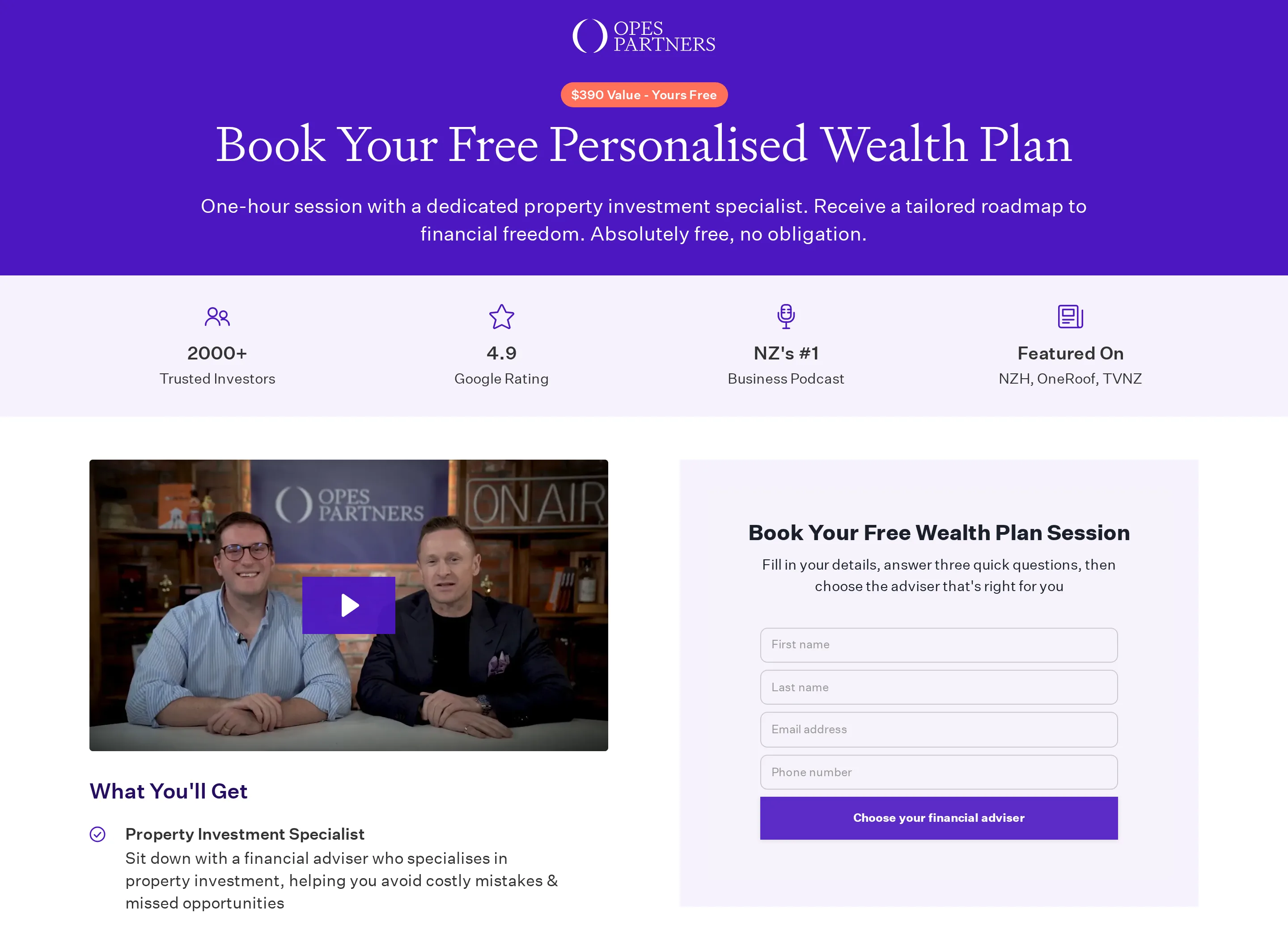
The matching runs on Meta’s ad and ad set IDs, so when the team launches a new ad, it lands on the right version of the page without anyone building a new landing page.
Step 2: Their answers
Get their details first. Ask what decides the call second.
The booking form takes a name, email and phone number, and the lead is in HubSpot before a single qualifying question appears. Then come three quick questions: how they heard about Opes, whether they’re planning to invest in the next two years, and whether they’re open to new builds.
The answers decide where they go. Investors who fit pick their adviser. Someone who isn’t open to new builds hears that the meeting might not be right for them. Someone buying a home to live in is sent to Opes’s mortgage advisers instead.
| Their answers | Where they go |
|---|---|
| Investing soon and open to new builds | Choose your financial adviser |
| Not open to new builds | “This meeting might not be right for you” |
| Buying a home to live in | “You should talk to our Mortgage Advisers” |
More questions, asked when people are happy to answer
Sign up for a webinar or the newsletter and the confirmation page asks a few more questions: where they are in their investment journey, the main reason they want to invest, which region they live in, and what’s holding them back.
The questions come after the signup, so people answer once they already have what they came for. Every answer lands on their HubSpot record.
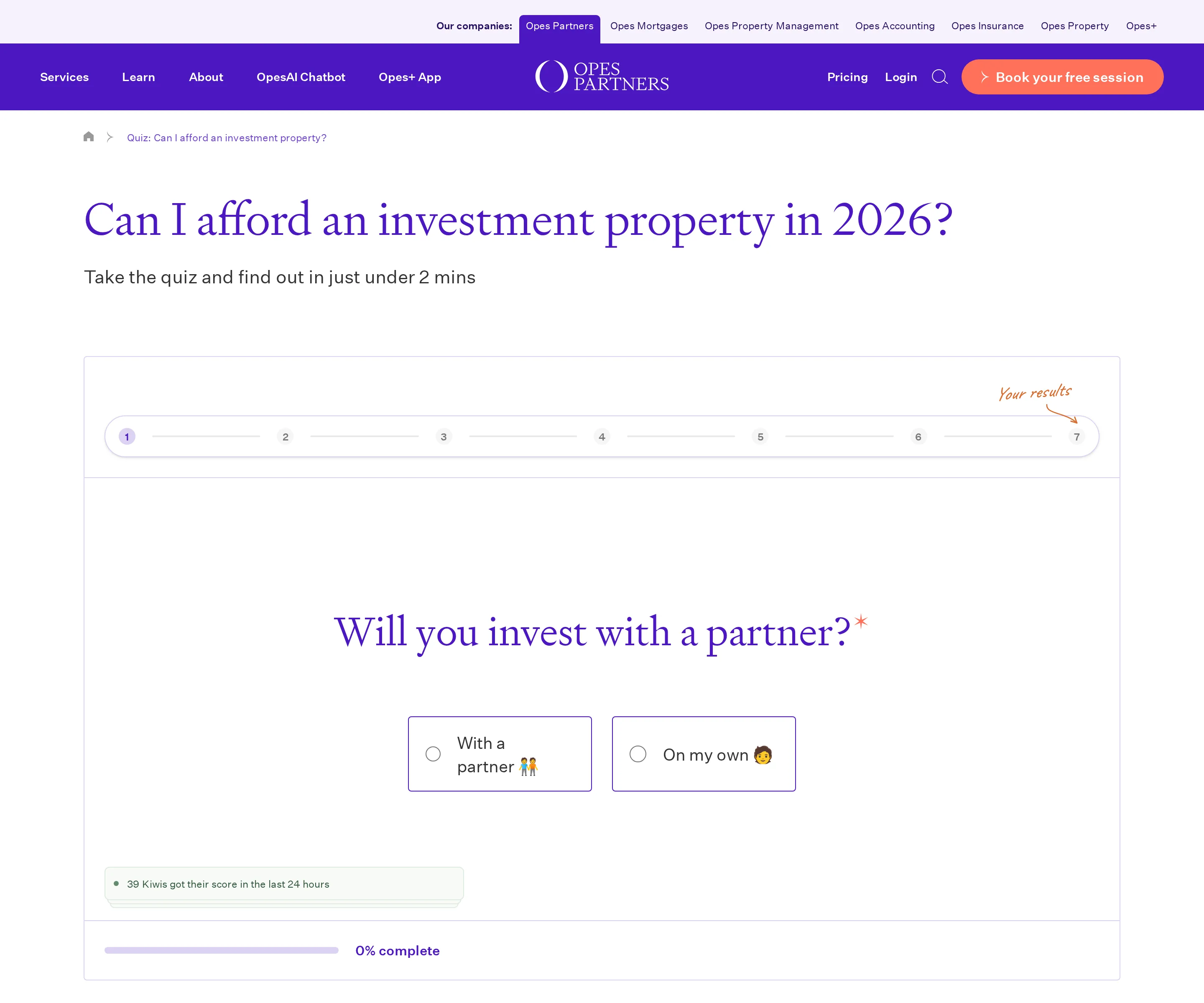
“Our team uses questions like ‘Are you open to our types of properties?’ and ‘How soon are you looking to invest?’ in order to better understand the quality of leads.”
Step 3: What they read
Let what they read choose the next offer.
Opes tracks which property markets and interest-rate topics a visitor reads about, and whether they’ve looked at pricing or the booking page.
What they read changes the offer they see next. The same information syncs to HubSpot, so the adviser knows too.
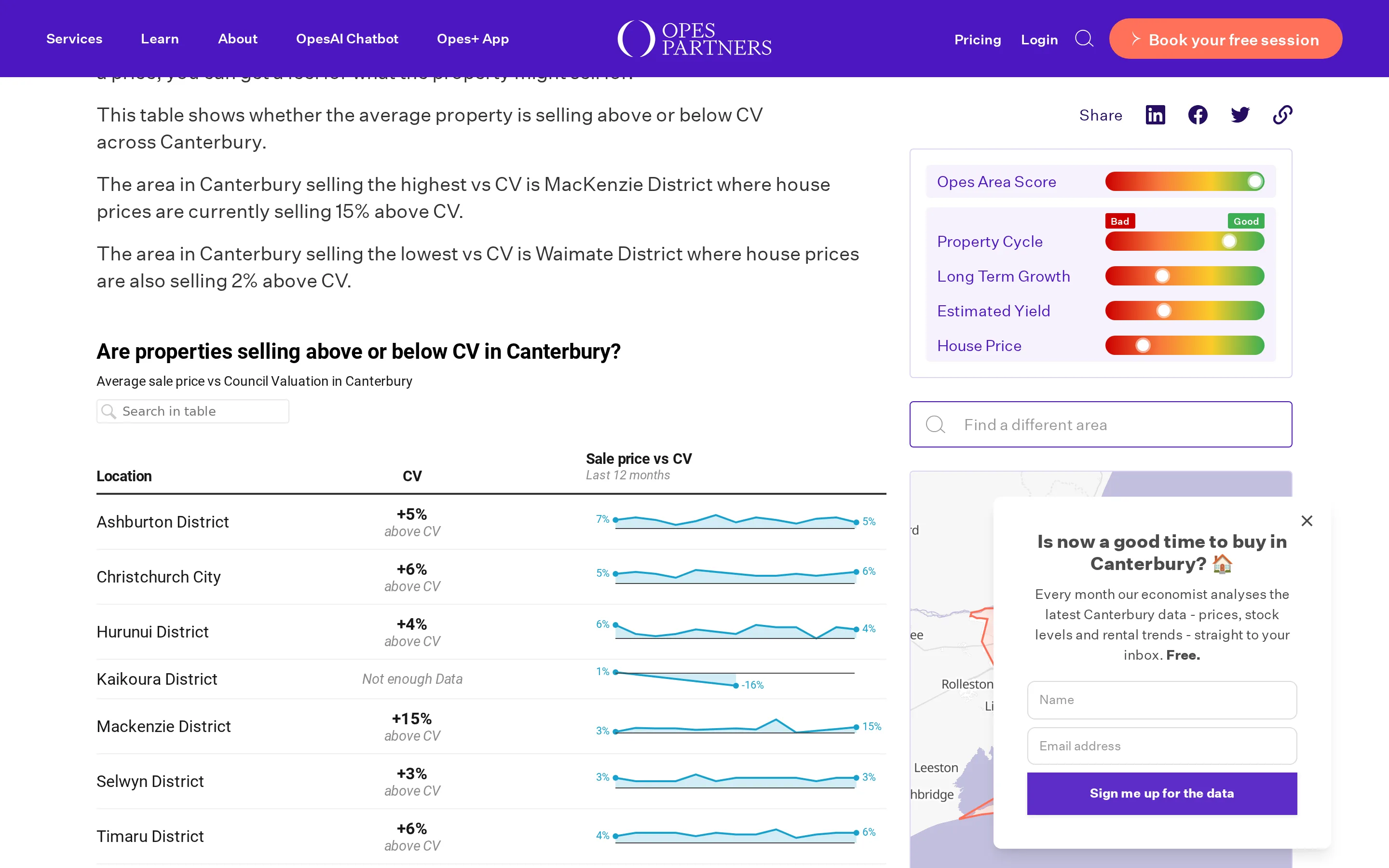
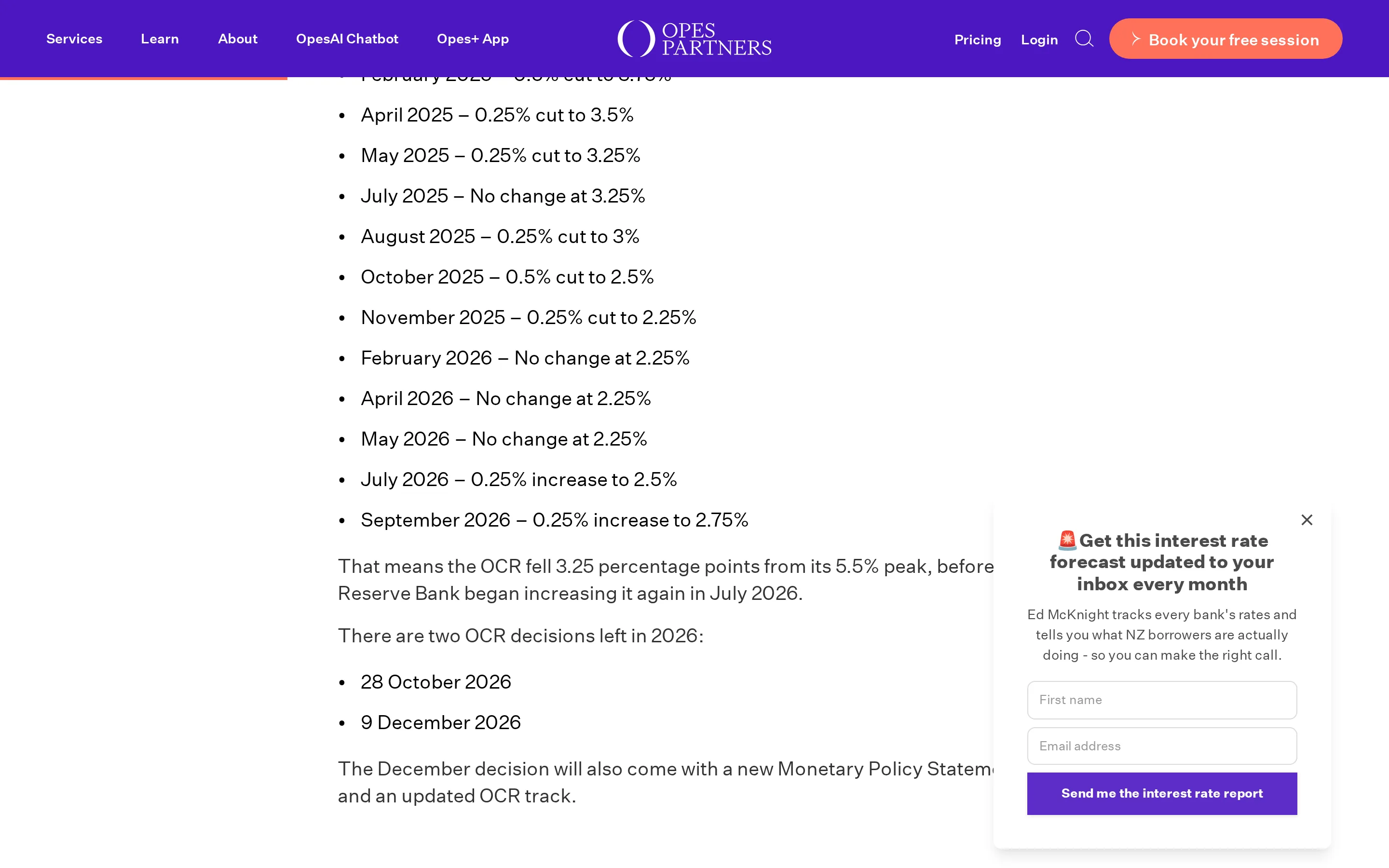
From the article to the adviser
Three things Opes picks up from reading and browsing, what each one changes on the site, and the field it fills in HubSpot.
| They read | Tagged as | They see | HubSpot field |
|---|---|---|---|
| What’s happening to Christchurch house prices? / | Property market of interest: Canterbury | “Is now a good time to buy in Canterbury?” | Property market of interest = Canterbury |
| Interest rate predictions NZ 2026 & 2027 / | Interest rate report: Predictions | “Get this interest rate forecast updated to your inbox every month” | Interest rate report = Predictions |
| The pricing page / | Website intent: Visited Pricing Page | No offer. It’s a buying signal for the adviser. | Website intent = Visited Pricing Page |
Step 4: The adviser call
Give the adviser the profile before they say hello.
RightMessage fills 16 fields on the investor’s HubSpot contact: what they told Opes on one side, what they showed Opes by reading on the other.
Opes’s advisers are its sales team. They read those fields when they prepare for a session, and use them to qualify the booking and to pick their angle. An existing investor chasing passive income who keeps reading about Auckland gets a different opening than a first-time buyer worried about getting the finance.
Investor lead
Free Wealth Plan session lead
Told us
Booking form and thank-you-page answers
- Investment journey
- Already owns an investment property
- Main goal
- Retire comfortably
- Extended goal
- Passive income
- What’s holding them back
- Getting the finance
- Region · closest city
- Waikato · Hamilton
- Planning to buy in the next 2 years
- Yes
- Open to new builds
- Yes
- How they heard about Opes
- Podcast
Showed us
What they read and visited on the site
- Property market of interest
- Auckland
- Interest rate report
- Interest rate changes
- Website intent
- Visited Pricing Page
Better-qualified bookings, and calls that start further along.
Four things changed for Opes’s marketing team and for the advisers who run its sales calls.
- Each Meta ad lands on a fully personalized booking page
- Each Meta audience and creative angle gets its own headline, copy and button on the booking page. New ads land on the right version without anyone building a new page.
- Two booking questions steer wrong-fit leads away from an adviser’s schedule
- Investors who plan to buy within two years and are open to new builds pick an adviser. People buying a home to live in go to the mortgage team instead. This limits the number of bad-fit leads that used to end up on advisers’ schedules.
- Advisers see the investor’s goals, timeline, context and on-site activity in HubSpot
- RightMessage fills 16 fields on the investor’s HubSpot contact, including what’s holding them back. Advisers read those fields when they prepare for a session, so they can put together a tailored plan of action for each lead.
- Opes’s marketing team can fully personalize its website and landing pages without involving IT
- The marketing team doesn’t usually have direct access to the underlying website. RightMessage lets the team set up and test targeted popups, forms, personalized language on sales pages and more without involving IT.
Opes keeps its conversion figures private, so this story doesn’t include them.
“[RightMessage’s] new ad features have saved us so many headaches in terms of going back and forth with our advertising agency. Now we can handle personalization ourselves. It’s much faster, and we actually start using it and getting it done.”
 Ed McKnightResident Economist, Opes Partners